
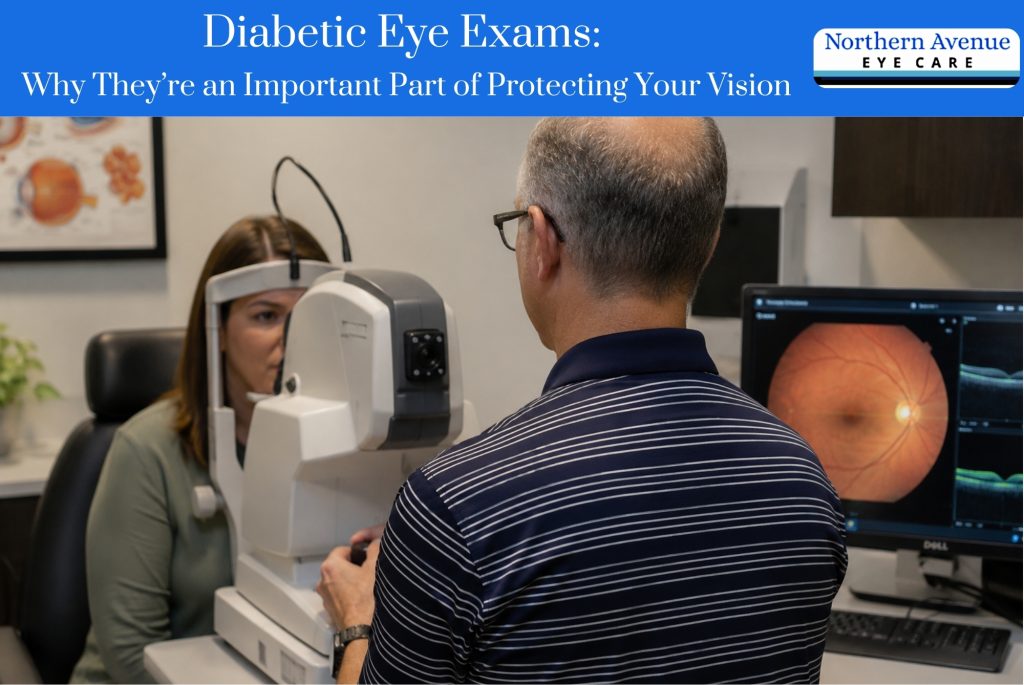
Diabetes can affect many parts of the body, including the eyes. Some diabetes-related eye conditions can develop gradually and may cause few noticeable symptoms in their early stages. For this reason, routine diabetic eye exams are an important part of protecting your vision and managing your overall health.
At Northern Avenue Eye Care in Phoenix, Arizona, comprehensive eye care can help patients with diabetes monitor changes in their eye health and identify potential problems as early as possible. Understanding why these examinations matter, what they involve, and how diabetes can affect the eyes can help you take a more proactive approach to your long-term vision.
Why Are Diabetic Eye Exams Important?
Diabetes can damage small blood vessels throughout the body. The retina, which is the light-sensitive tissue lining the back of the eye, contains an extensive network of tiny blood vessels that can be affected by elevated blood sugar levels.
One of the most significant diabetes-related eye conditions is diabetic retinopathy. According to the National Eye Institute, diabetic retinopathy is caused by damage to blood vessels in the retina. In its early stages, a person may have no symptoms or only mild vision changes. As the condition progresses, however, it can threaten vision.
A comprehensive diabetic eye exam allows an eye care professional to examine the health of the retina and other structures of the eye. Regular examinations may reveal changes before a patient notices a problem with their eyesight.
Early detection is especially important because treatment and appropriate medical management can help reduce the risk of severe vision loss from certain diabetic eye diseases.
How Does Diabetes Affect the Eyes?
Blood glucose, blood pressure, cholesterol levels, the duration of diabetes, and other health factors can influence the risk of developing diabetes-related eye complications.
When chronically elevated blood sugar damages retinal blood vessels, those vessels may weaken, leak fluid or blood, or become blocked. In more advanced disease, abnormal new blood vessels may develop.
Diabetes is also associated with an increased risk of several other eye conditions. This makes regular eye care important even when your vision seems normal.
What Is Diabetic Retinopathy?
Diabetic retinopathy is an eye disease that can occur in people with diabetes. It generally develops in stages and can affect one or both eyes.
The two broad stages are nonproliferative diabetic retinopathy and proliferative diabetic retinopathy.
Nonproliferative diabetic retinopathy (NPDR) is the earlier stage. Small retinal blood vessels may weaken, leak, or develop other abnormalities.
Proliferative diabetic retinopathy (PDR) is a more advanced stage. New, abnormal blood vessels can grow on the retina and into the vitreous, the gel-like substance filling the eye. These fragile vessels can bleed and potentially cause serious complications.
Because diabetic retinopathy may not produce obvious symptoms during its earlier stages, waiting until your eyesight changes is not a reliable way to determine whether your retinas are healthy.
What Is Diabetic Macular Edema?
The macula is the central portion of the retina responsible for detailed central vision. Diabetic macular edema, often abbreviated as DME, occurs when fluid accumulates in the macula as a result of leaking retinal blood vessels.
Macular swelling can interfere with tasks requiring detailed central vision, such as reading, driving, and recognizing faces.
Diabetic macular edema can occur at different stages of diabetic retinopathy, which is another reason ongoing retinal evaluation is important for people with diabetes.
Can Diabetes Increase the Risk of Cataracts?
Yes. People with diabetes have an increased risk of developing cataracts. A cataract occurs when the normally clear lens inside the eye becomes cloudy.
Cataracts can cause blurry or hazy vision, increased glare, reduced contrast, difficulty seeing at night, and changes in color perception. Although cataracts are common with aging, diabetes can increase the likelihood of developing them.
Routine comprehensive eye examinations allow an eye doctor to evaluate the clarity of the lens and determine whether cataracts or other conditions may be affecting vision.
Is There a Connection Between Diabetes and Glaucoma?
Diabetes is associated with an increased risk of glaucoma. Glaucoma refers to a group of eye diseases that damage the optic nerve, which carries visual information from the eye to the brain.
Certain forms of glaucoma can progress without obvious symptoms until substantial vision has been lost. A comprehensive eye examination may include evaluation of eye pressure, the optic nerve, and other factors associated with glaucoma risk.
For someone living with diabetes, monitoring the retina is important, but a diabetic eye exam can also provide an opportunity to evaluate broader eye health.
What Happens During a Diabetic Eye Exam?
The exact components of an examination depend on the patient’s medical history, symptoms, previous findings, and individual needs.
A diabetic eye examination may include a review of your medical and ocular history, measurement of visual acuity, evaluation of your prescription, examination of the front structures of the eyes, and assessment of the retina and optic nerve.
Dilating eye drops may be used to enlarge the pupils. This gives the eye care professional a better view of the retina and other structures inside the eye.
Additional retinal imaging or testing may be recommended when clinically appropriate. These technologies can provide additional information about retinal structures and help document changes over time.
Why Is Pupil Dilation Useful?
A dilated eye examination allows a wider view of the retina than may otherwise be possible through an undilated pupil.
During dilation, drops temporarily enlarge the pupils. The eye doctor can then examine the retina, retinal blood vessels, macula, optic nerve, and other internal structures for abnormalities.
The effects of dilation can temporarily cause light sensitivity and difficulty focusing at close distances. Patients should follow their eye care professional’s instructions regarding driving and other activities following dilation.
How Often Should People With Diabetes Have Eye Exams?
The appropriate schedule depends on the type of diabetes, pregnancy status, previous eye findings, and recommendations from the patient’s healthcare professionals.
The American Diabetes Association recommends that people with type 2 diabetes generally receive an initial dilated and comprehensive eye examination at the time of diagnosis. For people with type 1 diabetes, an initial dilated and comprehensive eye examination is generally recommended within five years after the onset of diabetes.
Follow-up intervals can vary. If there is evidence of diabetic retinopathy, more frequent examinations may be necessary. Some patients without evidence of retinopathy and with consistently normal examinations may be advised to follow a different schedule based on their individual circumstances.
Your eye doctor and diabetes care team can recommend an examination schedule appropriate for you.
Why Should You Have an Eye Exam Even When Your Vision Seems Fine?
Good eyesight does not necessarily mean that the retina is free of disease.
Early diabetic retinopathy can exist without causing noticeable changes in vision. A person may continue reading, working, and driving normally while retinal changes are developing.
This is one of the most important reasons preventive eye care matters for patients with diabetes. An examination can reveal signs that cannot be detected simply by judging how clearly you can see.
What Vision Symptoms Should People With Diabetes Watch For?
Although routine examinations are important even without symptoms, changes in vision should not be ignored.
Symptoms that warrant professional evaluation can include blurred or fluctuating vision, new floaters, dark or empty areas in the visual field, distorted vision, difficulty seeing at night, or a sudden decrease in vision.
A sudden onset of numerous floaters, flashes of light, a curtain or shadow across the field of vision, or sudden significant vision loss can indicate an urgent eye problem. Seek prompt professional evaluation if these symptoms occur.
Can Blood Sugar Changes Temporarily Affect Vision?
Yes. Changes in blood glucose can sometimes cause temporary fluctuations in vision. Changes in blood sugar can affect fluid balance and focusing structures within the eye, potentially making vision temporarily blurry.
This is one reason patients may occasionally notice that their prescription seems different during periods when their blood glucose is changing.
However, blurred or fluctuating vision should not automatically be assumed to be a harmless consequence of blood sugar changes. An eye examination can help determine whether symptoms are related to refractive changes, diabetic eye disease, or another condition.
How Does Managing Diabetes Help Protect Vision?
Eye care is one component of a broader diabetes management strategy. Maintaining blood glucose, blood pressure, and cholesterol within individualized target ranges established by your healthcare team can help reduce the risk or progression of diabetes-related complications.
Taking prescribed medications as directed, attending medical appointments, following an appropriate nutrition and activity plan, and avoiding tobacco can also contribute to overall health.
The eye doctor and primary diabetes care team serve different but complementary roles. Communication among healthcare professionals can be especially valuable when eye findings indicate changes associated with diabetes.
Can Diabetic Eye Disease Be Treated?
Treatment depends on the specific condition, its severity, and individual patient factors.
Some early changes may initially be monitored while the patient continues appropriate diabetes management. More advanced diabetic retinopathy or diabetic macular edema may require treatment by an ophthalmologist or retinal specialist.
Depending on the diagnosis, treatment options can include medications injected into the eye, laser procedures, surgery, or a combination of approaches. The appropriate treatment is determined through a comprehensive clinical evaluation.
Early identification can provide more opportunities to monitor disease and intervene when medically appropriate.
Are Diabetic Eye Exams Only for People With Poorly Controlled Diabetes?
No. Anyone with diabetes can potentially develop diabetes-related eye disease.
While long-term blood glucose management plays an important role in reducing risk, having well-managed diabetes does not eliminate the need for recommended eye examinations. Duration of diabetes, blood pressure, cholesterol, pregnancy, kidney health, genetics, and other factors can also influence risk.
Regular eye examinations should therefore be viewed as preventive healthcare rather than something reserved only for people experiencing diabetes complications.
Why Establish Ongoing Eye Care After a Diabetes Diagnosis?
Diabetes is a long-term health condition, and eye health can change over time. Establishing ongoing care gives your eye doctor an opportunity to document baseline findings and compare future examinations with previous results.
This longitudinal information can be valuable. Changes that might be difficult to recognize from a single examination can become more apparent when findings and retinal images are compared over time.
Ongoing care also gives patients an opportunity to discuss changes in their health, medications, vision, or diabetes management that may be relevant to their eyes.
Diabetic Eye Exams in Phoenix, Arizona
For patients living with diabetes in Phoenix and surrounding communities, routine eye examinations can be an important component of preventive healthcare.
Northern Avenue Eye Care provides eye care at 2337 W Northern Ave in Phoenix, Arizona. If you have diabetes, have recently been diagnosed, are due for an eye examination, or have noticed a change in your vision, scheduling an appointment can help you better understand your current eye health.
Rather than waiting for vision problems to appear, recommended diabetic eye examinations provide an opportunity to monitor your eyes proactively and identify concerns that may otherwise go unnoticed.
Frequently Asked Questions About Diabetic Eye Exams
What is a diabetic eye exam?
A diabetic eye exam is a comprehensive examination focused in part on identifying eye changes associated with diabetes. It commonly includes evaluation of the retina, macula, retinal blood vessels, optic nerve, and other ocular structures. Pupil dilation may be recommended to allow a more complete examination of the inside of the eye.
Is a diabetic eye exam different from a routine vision test?
It can be. A basic vision screening primarily determines how clearly you see and may identify a need for corrective lenses. A comprehensive diabetic eye examination evaluates the health of the eyes, including internal structures that can be affected by diabetes. Seeing clearly does not rule out early diabetic retinopathy.
Do I need a diabetic eye exam if I have no symptoms?
Yes, recommended examinations remain important even when you have no symptoms. Early diabetic retinopathy may not cause noticeable vision changes.
Can diabetic retinopathy cause blindness?
Advanced diabetic retinopathy can cause severe vision loss and, in some cases, blindness. Appropriate diabetes management, regular eye examinations, early diagnosis, and treatment when indicated can substantially reduce the risk of serious vision complications.
Does having diabetes mean I will develop diabetic retinopathy?
Not necessarily. However, anyone with diabetes can be at risk, and the likelihood generally increases with factors such as longer duration of diabetes and inadequate control of certain health risk factors. Regular examinations help determine whether retinal changes are present.
Can diabetic retinopathy be reversed?
Some retinal changes may not simply return to normal, but appropriate management and treatment can help slow progression and reduce the risk of further vision loss. The outlook depends on the type and severity of disease and other individual factors.
How long does a diabetic eye exam take?
Appointment length varies according to the testing required and the patient’s individual needs. If the pupils are dilated, the drops also require time to take effect, and their effects can persist after the examination.
Will my eyes be dilated during a diabetic eye exam?
Dilation is commonly used because it allows the eye doctor to obtain a wider view of the retina. Whether dilation is required during a particular visit depends on the patient’s circumstances and the eye doctor’s clinical judgment.
Can I drive after having my eyes dilated?
Dilation can cause temporary light sensitivity and blurred near vision. Individual responses vary. Ask your eye care professional about driving after your examination and consider arranging transportation if you are concerned about your ability to drive safely.
How often should I have a diabetic eye exam?
The appropriate frequency depends on your type of diabetes, previous examination findings, pregnancy status, and other risk factors. Your eye doctor can establish an individualized follow-up schedule based on current clinical recommendations and your health history.
Can diabetes cause blurry vision without diabetic retinopathy?
Yes. Changes in blood glucose can sometimes temporarily affect focusing and cause blurred vision. Cataracts, glaucoma, refractive errors, dry eye, and many other conditions can also cause blurred vision. An examination is necessary to determine the cause.
Can pregnancy affect diabetic eye disease?
Pregnancy can influence diabetic retinopathy in people with preexisting diabetes. Patients with diabetes who are pregnant or planning pregnancy should discuss appropriate retinal examinations and monitoring with their eye doctor and medical care team.
What should I bring to a diabetic eye exam?
It can be helpful to bring your current glasses or contact lenses, a medication list, relevant medical information, and details about your diabetes care. If you know your recent A1C or other relevant health measurements, you may also wish to share them with your eye care professional.
Should I tell my eye doctor about changes in my diabetes medications?
Yes. Keeping your eye doctor informed about relevant medical changes, medications, blood glucose management, and other health conditions can provide useful context for your eye care.
When should I seek urgent eye care?
Seek prompt professional evaluation for sudden vision loss, a sudden increase in floaters, flashes of light, a curtain or shadow over part of your vision, or another significant or rapidly developing visual change. These symptoms can be associated with conditions requiring urgent assessment.
What is the most important thing I can do to protect my eyesight if I have diabetes?
There is no single measure that replaces comprehensive diabetes and eye care. Important steps include managing blood glucose and other health risk factors according to your healthcare team’s recommendations, attending regular medical appointments, having recommended comprehensive eye examinations, and promptly reporting new vision symptoms.
Protect Your Vision With Regular Diabetic Eye Care
Diabetic eye disease does not always announce itself with obvious symptoms. That is precisely why recommended comprehensive eye examinations are such an important part of long-term diabetes care.
Monitoring the retina and overall health of your eyes can help identify changes early, establish a record for future comparison, and determine when additional monitoring or treatment may be appropriate.
If you have diabetes and are due for an eye examination, contact Northern Avenue Eye Care in Phoenix to schedule an appointment. Consistent preventive care today can play an important role in protecting your vision for the years ahead.
Contact Information
Northern Avenue Eye Care
2337 W Northern Ave
Phoenix, AZ 85021
Phone: (602) 995-8848
Website: northernaveeyecare.com
Schedule An Appointment: northernaveeyecare.com/appointments/