
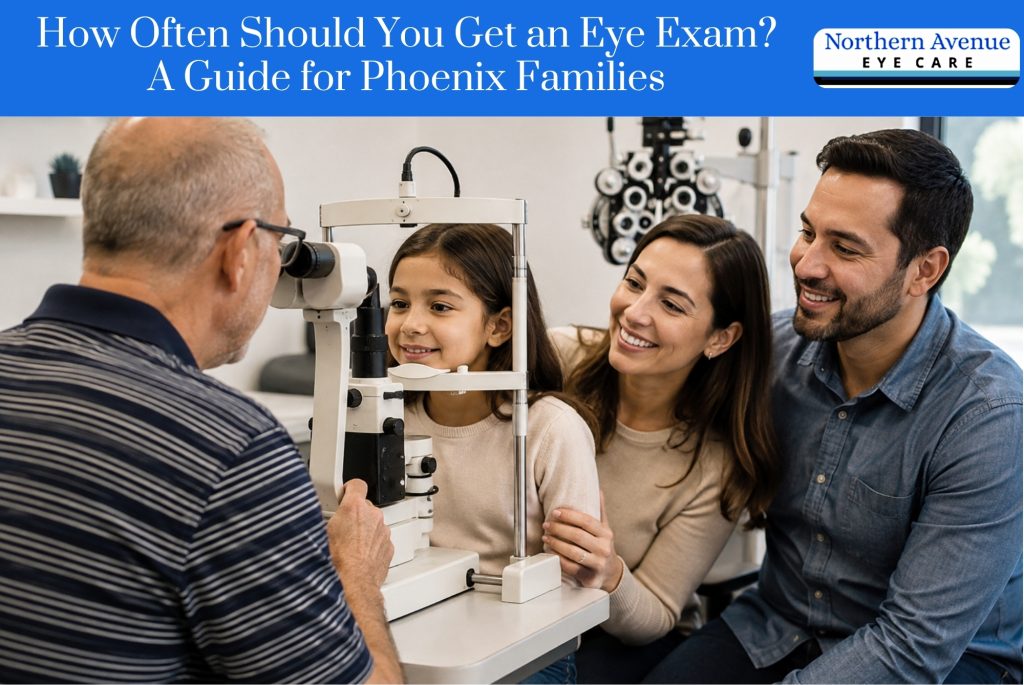
Regular eye exams are an important part of maintaining clear vision and protecting long-term eye health. Yet many people wait until they notice blurry vision, headaches, eye strain, or another problem before scheduling an appointment. Because some eye conditions can develop with few or no noticeable symptoms in their early stages, routine comprehensive eye exams can identify concerns before they begin interfering with daily life.
For families in Phoenix, maintaining a regular eye exam schedule is especially valuable. Children’s vision can change as they grow, adults may develop new prescription or eye health needs, and older adults have a higher likelihood of developing age-related eye conditions. Arizona’s sunny climate and high levels of ultraviolet (UV) exposure also make year-round eye protection an important consideration.
At Northern Avenue Eye Care in Phoenix, comprehensive eye care can help patients understand their vision, monitor changes over time, and determine an appropriate schedule for future examinations based on age, health history, symptoms, and individual risk factors.
How Often Should You Get an Eye Exam?
There is no single examination schedule that is appropriate for every patient. How often you should have your eyes examined depends on factors including your age, current vision, prescription, overall health, family history, medications, and risk of developing eye disease.
For many people, routine comprehensive eye examinations are appropriate every one to two years. However, some patients should be evaluated more frequently. An eye doctor can recommend an individualized schedule after considering your vision and eye health.
People who wear glasses or contact lenses, have diabetes or other relevant medical conditions, have a personal or family history of eye disease, experience recurring vision symptoms, or have previously been diagnosed with an eye condition may require more frequent monitoring.
Children and older adults also have distinct vision needs that can affect how often examinations are recommended.
Eye Exam Recommendations by Age
Infants and Young Children
Vision develops rapidly during infancy and early childhood. Healthy visual development supports a child’s ability to recognize faces, coordinate movement, judge distances, and eventually develop the visual skills needed for reading and classroom learning.
Parents should pay attention to possible signs of a vision problem, including persistent eye turning, excessive squinting, frequent eye rubbing, unusual sensitivity to light, difficulty tracking objects, or consistently holding objects very close to the face.
Vision screenings can be useful, but a screening and a comprehensive eye examination are not the same. A comprehensive examination allows an eye doctor to evaluate vision as well as multiple aspects of ocular health and visual function.
Children with concerning symptoms, developmental risk factors, or a family history of certain eye conditions may need an examination earlier or more frequently than children without those risk factors.
School-Age Children and Teenagers
School places significant demands on a child’s visual system. Reading books, viewing classroom presentations, completing homework, participating in sports, and using computers or tablets all depend on effective vision.
School-age children should receive regular vision care, with examination frequency based on their individual needs and their eye doctor’s recommendations.
Parents should consider scheduling an eye examination if a child begins squinting, complains of headaches, loses their place while reading, sits unusually close to screens, struggles to see the board at school, avoids reading, or experiences unexplained changes in academic performance.
Children who already wear glasses or contact lenses may need more frequent visits because their prescriptions can change as they grow.
Adults Ages 18 to 39
Young adults sometimes assume that good eyesight means their eyes are healthy. However, visual acuity is only one component of ocular health.
Adults should continue receiving routine comprehensive eye examinations even when they have no obvious symptoms. These visits establish useful baseline information and allow an eye doctor to monitor changes in vision and eye health over time.
People who spend many hours using computers and digital devices may also experience symptoms such as tired eyes, temporary blurred vision, headaches, or dry-eye discomfort. An eye examination can help determine whether these symptoms are related to prescription needs, focusing demands, ocular surface problems, or other factors.
Adults Ages 40 to 64
Vision commonly changes during the 40s and 50s. One of the most familiar changes is presbyopia, an age-related reduction in the eye’s ability to focus clearly on nearby objects.
People may notice that they need to hold reading material farther away, require brighter lighting, or experience more difficulty reading small print.
This period of adulthood is also an important time to monitor eye health. An eye doctor may evaluate for signs of glaucoma, cataracts, retinal changes, and other conditions based on a patient’s age and individual risk factors.
Adults with diabetes, high blood pressure, a strong family history of eye disease, or other relevant health concerns may need more frequent examinations.
Adults Age 65 and Older
Regular comprehensive eye examinations become increasingly important with age because the risk of several eye conditions rises in older adulthood.
These can include cataracts, glaucoma, age-related macular degeneration, diabetic eye disease, and other retinal or ocular health concerns.
Older adults should follow an examination schedule recommended by their eye doctor. More frequent monitoring may be necessary when an eye condition has already been diagnosed or when significant risk factors are present.
Why Are Comprehensive Eye Exams Important?
A comprehensive eye examination provides information that a basic vision screening cannot.
Checking Visual Acuity
Visual acuity testing measures how clearly you can see at different distances. Changes in acuity may indicate that a glasses or contact lens prescription needs to be updated.
Evaluating Refractive Errors
An eye examination can identify common refractive errors such as myopia (nearsightedness), hyperopia (farsightedness), astigmatism, and presbyopia.
Correcting refractive errors can improve visual comfort and make activities such as driving, reading, working, and studying easier.
Assessing Eye Health
Depending on the examination and the patient’s needs, an eye doctor can evaluate structures at the front and back of the eye and look for signs that may warrant additional attention or monitoring.
This is particularly important because certain eye diseases can progress before a patient notices substantial changes in vision.
Monitoring Changes Over Time
Routine examinations create a history of your eye health. Comparing findings from one examination with previous visits can help an eye doctor recognize changes and determine whether further evaluation or closer monitoring is appropriate.
Who May Need Eye Exams More Often?
Some patients need eye examinations more frequently than the general population.
People With Diabetes
Diabetes can affect blood vessels throughout the body, including those in the retina. Diabetic retinopathy can threaten vision, particularly when the condition progresses without appropriate monitoring and treatment.
People with diabetes should follow the eye examination schedule recommended by their healthcare and eye care professionals.
People With a Family History of Eye Disease
Family medical history can influence a person’s risk for certain eye conditions. Patients should tell their eye doctor about close relatives who have experienced glaucoma, macular degeneration, retinal disease, or other significant eye disorders.
This information can help determine an appropriate monitoring schedule.
Contact Lens Wearers
Contact lenses sit directly on the eye’s surface, so regular examinations are important for evaluating vision, lens fit, comfort, and ocular health.
Contact lens wearers should also follow recommended replacement schedules and proper lens hygiene practices.
People With Existing Eye Conditions
Patients who have already been diagnosed with glaucoma, retinal disorders, significant dry eye, or another ocular condition may require appointments more frequently than routine preventive examinations.
The appropriate schedule depends on the condition, its severity, treatment, and the eye doctor’s clinical recommendations.
People Experiencing New Vision Changes
A routine examination schedule should not be used as a reason to delay care when new symptoms occur.
Sudden changes in vision, new flashes or floaters, significant eye pain, double vision, sudden loss of peripheral vision, or a curtain- or shadow-like effect in the field of vision can require prompt evaluation. Some sudden visual symptoms can represent an eye emergency and should receive immediate medical attention.
Eye Health Considerations for Phoenix Families
Living in Phoenix creates several environmental considerations for eye comfort and protection.
UV Exposure in Arizona
Phoenix residents experience abundant sunshine throughout the year. Long-term exposure to ultraviolet radiation is associated with several eye health concerns.
Adults and children should consider wearing sunglasses that provide broad UV protection when outdoors. A wide-brimmed hat can provide additional protection from direct sunlight.
UV protection is important throughout the year, not only during summer.
Dry Air and Eye Comfort
Phoenix’s dry desert climate, combined with indoor air conditioning, can contribute to eye dryness and irritation for some people.
Symptoms may include burning, stinging, grittiness, fluctuating vision, redness, or watery eyes. Although occasional dryness can have environmental causes, persistent symptoms should be discussed with an eye care professional because several factors can contribute to dry eye.
Dust and Airborne Irritants
Dust, wind, pollen, and other airborne particles can irritate the ocular surface. Patients who experience recurring redness, itching, or irritation should avoid repeatedly rubbing their eyes and consider discussing persistent symptoms during an eye examination.
Screen Use
Digital devices are part of everyday life for many Phoenix families. Extended periods of close-up screen use can contribute to visual fatigue and discomfort.
Taking periodic breaks, blinking regularly, adjusting screen position, reducing glare, and using an appropriate vision prescription can help improve comfort. Persistent symptoms deserve professional evaluation rather than simply being attributed to screen time.
Eye Exams and Children’s School Performance
Clear, comfortable vision is important for many classroom activities. Children need to see materials at different distances, shift focus between a desk and the front of a classroom, read printed and digital materials, and coordinate visual information with writing and movement.
A child may not always realize that their vision is different from other people’s vision. As a result, they may not report a problem.
Parents and caregivers should watch for behavioral clues such as squinting, closing one eye, tilting the head, avoiding close-up tasks, complaining of headaches, or struggling to see distant objects.
A comprehensive eye examination can determine whether a vision issue is present and whether corrective lenses or additional evaluation may be appropriate.
Is a Vision Screening the Same as an Eye Exam?
No. A vision screening and a comprehensive eye examination serve different purposes.
A screening is generally designed to identify people who may have a vision problem and need further evaluation. Screenings can be valuable in schools, pediatric offices, community programs, and other settings, but they typically evaluate fewer aspects of vision and eye health.
A comprehensive eye examination is performed by an eye care professional and provides a more detailed assessment. Depending on the patient’s age and needs, it can evaluate visual acuity, refractive error, eye coordination, focusing, and ocular health.
Passing a screening does not necessarily mean that every potential vision or eye health concern has been ruled out.
Should You Get an Eye Exam Even If Your Vision Seems Fine?
Yes, routine eye care can still be appropriate when your vision seems normal.
Good central vision does not guarantee that every aspect of eye health is normal. Some conditions may initially cause subtle changes or no symptoms noticeable to the patient.
Regular examinations also establish baseline information. This gives your eye doctor previous findings to compare with future examinations, which can make changes easier to identify and monitor.
Signs You Should Schedule an Eye Exam
You do not necessarily need to wait until your next routine examination if something about your vision changes.
Consider scheduling an eye examination if you notice persistent blurry vision, frequent squinting, recurring headaches associated with visual tasks, difficulty focusing, increasing problems with nighttime vision, eye fatigue, persistent dryness or irritation, or a noticeable change in how clearly you see.
Sudden or severe symptoms should be handled differently. Sudden vision loss, significant eye injury, severe eye pain, a sudden increase in flashes or floaters, or a dark curtain or shadow across your vision can require urgent medical evaluation.
What Should You Expect During a Comprehensive Eye Exam?
The exact components of an eye examination vary depending on the patient’s age, symptoms, medical history, and clinical needs.
Health and Vision History
Your eye care provider may ask about your current vision, previous eye conditions, medications, general medical history, family history, and any symptoms you have noticed.
Providing complete information helps your eye doctor assess potential risk factors.
Vision Testing
Testing can determine how clearly you see and whether corrective lenses could improve your vision.
If you already wear glasses or contact lenses, your current prescription may be evaluated to determine whether changes are appropriate.
Eye Function Testing
Depending on your needs, the examination may include evaluation of how your eyes move, focus, and work together.
Eye Health Evaluation
Your eye doctor may examine external and internal structures of your eyes using specialized instruments. Additional testing may be recommended based on age, risk factors, symptoms, or examination findings.
How to Prepare for Your Eye Exam
Preparing a few details before your appointment can help your eye doctor better understand your vision and health history.
Bring your current glasses and contact lenses, if applicable, along with information about medications you take. Be prepared to discuss previous eye problems, relevant medical conditions, and any family history of eye disease.
It can also help to make a short list of symptoms or questions beforehand. Note when symptoms started, how frequently they occur, and whether specific activities make them better or worse.
Parents bringing a child for an examination may want to mention school-related concerns, headaches, squinting, reading difficulties, or other behaviors they have noticed.
Frequently Asked Questions About Eye Exams
How often should adults get an eye exam?
Many adults benefit from comprehensive eye examinations every one to two years, but the ideal frequency varies. Age, prescription needs, medical conditions, family history, symptoms, and previous examination findings can all affect the recommended schedule. Your eye doctor can provide a personalized recommendation.
How often should children get their eyes checked?
Children should receive age-appropriate vision care throughout childhood, and the recommended frequency depends on their age and individual risk factors. Children with glasses, contact lenses, symptoms, developmental concerns, or certain family histories may need more frequent comprehensive examinations.
Do I need an eye exam if I have 20/20 vision?
Potentially, yes. The term 20/20 primarily describes a measure of visual acuity. It does not provide a complete assessment of eye health, peripheral vision, focusing, eye coordination, or every potential eye condition.
Is an annual eye exam necessary?
Annual examinations are appropriate for some patients, while others may be advised to return on a different schedule. Patients who wear contact lenses, have certain health conditions, are being monitored for an eye disorder, or have other risk factors may be advised to have examinations every year or more frequently.
Can an eye exam detect glaucoma?
A comprehensive eye examination can include assessments used to identify signs or risk factors associated with glaucoma. Because glaucoma can sometimes develop without noticeable early symptoms, regular eye care is especially important for people at increased risk.
Can an eye exam detect cataracts?
Yes. An eye doctor can examine the lens of the eye for changes consistent with cataracts and assess how those changes may be affecting vision.
How does diabetes affect how often I need an eye exam?
Diabetes increases the risk of diabetic eye disease, including diabetic retinopathy. The appropriate examination schedule depends on factors such as the type and duration of diabetes, pregnancy status, previous retinal findings, and recommendations from your healthcare providers.
Does wearing glasses mean I need an eye exam every year?
Not necessarily. Examination frequency depends on more than whether you wear glasses. Your age, prescription stability, symptoms, health history, and eye health all matter. Follow the schedule recommended by your eye doctor.
How often should contact lens wearers have an eye exam?
Contact lens wearers typically require regular follow-up because an eye care professional needs to assess prescription, lens fit, comfort, and the health of the eye’s surface. Your provider can recommend the appropriate schedule for your lenses and individual needs.
Are school vision screenings enough for children?
School screenings can identify some potential vision problems, but they do not replace comprehensive eye examinations. A child may pass a screening while still having a vision or eye health concern that requires more detailed evaluation.
Can too much screen time damage my eyes?
Long periods of screen use can contribute to symptoms such as eye fatigue, dryness, temporary blurred vision, and headaches. These symptoms are often associated with sustained near focusing and reduced blinking. Persistent or significant symptoms should be evaluated by an eye care professional.
When should I seek urgent care for an eye problem?
Seek prompt medical attention for sudden vision loss, significant eye trauma, severe eye pain, chemical exposure, a sudden onset or substantial increase in flashes or floaters, or a curtain or shadow moving across your vision. These symptoms should not wait for a routine appointment.
Does Phoenix’s sunny climate affect eye health?
High levels of sunlight make UV protection particularly relevant for Phoenix residents. Wearing sunglasses that block UVA and UVB radiation and using a wide-brimmed hat can help reduce UV exposure to the eyes.
Can dry Arizona air cause eye irritation?
Yes. Low humidity, wind, dust, and air conditioning can contribute to dry or irritated eyes. Persistent burning, grittiness, redness, watering, or fluctuating vision should be evaluated because dry-eye symptoms can have multiple causes.
At what age do people usually start having trouble reading up close?
Presbyopia commonly becomes noticeable during the 40s. People may begin holding reading material farther away or needing additional light for close work. An eye examination can determine whether reading glasses, progressive lenses, or another vision correction option may be appropriate.
Should I schedule an exam if my prescription suddenly seems wrong?
Yes. A noticeable or unexpected change in vision deserves evaluation, particularly if the change is sudden. Prescription changes can occur naturally, but vision changes can also have other causes that should be assessed by an eye care professional.
Make Eye Exams Part of Your Family’s Preventive Care
Eye care needs change throughout life. Children need healthy vision as they learn and develop, working-age adults need comfortable and reliable vision for everyday activities, and older adults benefit from regular monitoring for age-related eye conditions.
Rather than relying on a universal schedule, the best approach is to establish an examination frequency based on your individual vision, age, health history, symptoms, and risk factors.
Phoenix residents should also remember that eye health extends beyond the examination room. Consistent UV protection, appropriate contact lens hygiene, management of relevant health conditions, attention to persistent symptoms, and timely evaluation of sudden vision changes all contribute to protecting eyesight.
If you or a family member is due for an eye examination, Northern Avenue Eye Care can help assess your current vision and eye health and recommend an appropriate schedule for future care.
Contact Information
Northern Avenue Eye Care
2337 W Northern Ave
Phoenix, AZ 85021
Phone: (602) 995-8848
Website: northernaveeyecare.com
Schedule An Appointment: northernaveeyecare.com/appointments/