
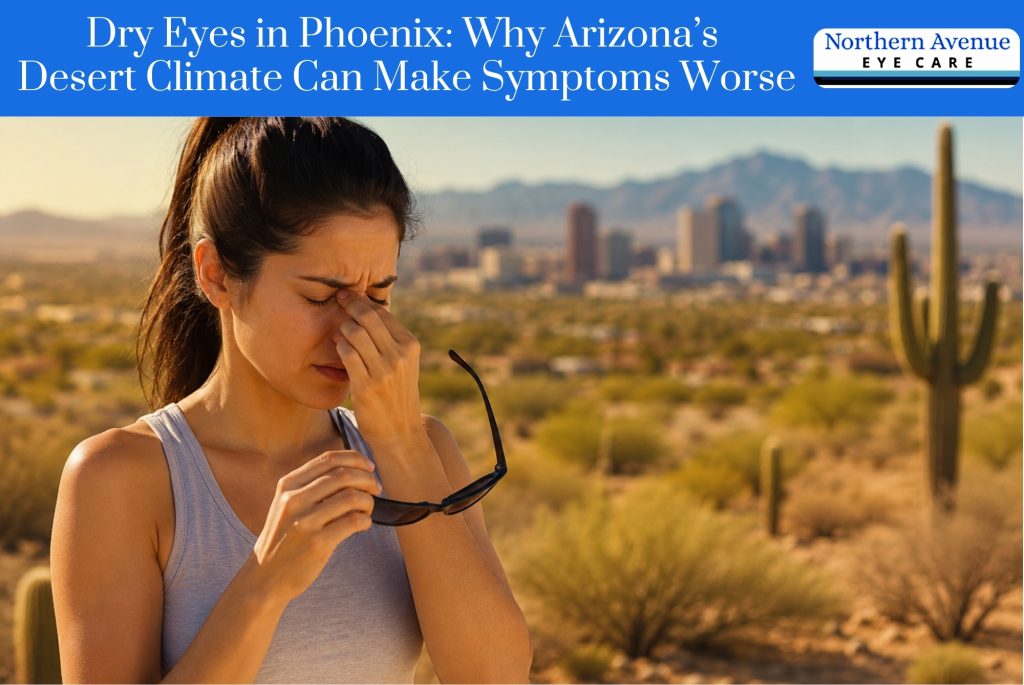
Living in Phoenix means enjoying abundant sunshine, warm temperatures, and a unique desert landscape. However, Arizona’s hot, dry climate can present challenges for eye comfort. For people who already experience dry eye symptoms, the combination of low humidity, intense heat, wind, air conditioning, dust, and prolonged screen use can make irritation considerably more noticeable.
Dry eye occurs when the eyes do not produce enough tears or when tears evaporate too quickly to maintain a healthy, comfortable ocular surface. Symptoms can range from occasional irritation to persistent burning, redness, fluctuating vision, or a gritty sensation.
At Northern Avenue Eye Care in Phoenix, AZ, patients experiencing persistent dry eye symptoms can receive a professional eye evaluation to help identify contributing factors and determine an appropriate treatment approach. Understanding why Phoenix’s desert environment can aggravate dry eyes is an important first step toward protecting your comfort and vision.
What Is Dry Eye?
Dry eye is a condition involving inadequate lubrication of the eye’s surface. A healthy tear film does much more than make the eyes feel comfortable. Tears help maintain a smooth optical surface, wash away debris, protect against irritation, and support the health of the cornea and conjunctiva.
The tear film contains multiple components, including an oily layer that helps slow evaporation and a watery component that provides moisture. Disruption of tear production, tear-film stability, or normal oil secretion from the eyelids can contribute to dry eye.
Some people primarily have insufficient tear production, while others experience excessive tear evaporation. Many patients have a combination of factors.
Why Is Dry Eye Common in Phoenix?
Low Humidity Can Increase Tear Evaporation
Phoenix has an arid desert climate, which means residents routinely spend time in environments with low relative humidity. When surrounding air contains little moisture, water can evaporate more readily from exposed surfaces—including the tear film covering the eyes.
For someone with an already unstable tear film, spending extended periods in dry air may make burning, stinging, irritation, or fluctuating vision more noticeable.
Extreme Heat Can Add to Eye Discomfort
Phoenix summers are known for prolonged periods of extreme heat. Although heat itself is not necessarily the underlying cause of dry eye disease, hot and dry outdoor conditions can create an environment that encourages tear evaporation.
Moving repeatedly between extreme outdoor heat and heavily air-conditioned indoor environments can also expose the eyes to very different temperature and humidity conditions throughout the day.
Air Conditioning Can Dry the Eyes
Air conditioning is essential for much of the year in Phoenix, but constant exposure to conditioned air can contribute to eye dryness.
Airflow from ceiling vents, vehicle air conditioners, desk fans, and other sources may accelerate evaporation of the tear film, particularly when the airflow is directed toward the face.
People who spend many hours in air-conditioned offices, homes, vehicles, or other indoor environments may therefore experience dry eye symptoms even when they spend relatively little time outside.
Wind Can Accelerate Tear Evaporation
Windy conditions can cause tears to evaporate more quickly. Activities such as walking, hiking, cycling, running, or working outside can expose the eyes to moving air for extended periods.
Even driving with the windows down or sitting directly in front of a fan can increase airflow across the eyes.
Dust and Airborne Irritants Can Aggravate Symptoms
Phoenix’s desert environment can expose residents to dust and other airborne particles. These particles may irritate the ocular surface, especially when the eyes are already dry.
Rubbing irritated eyes can sometimes make matters worse. Persistent irritation should be evaluated rather than automatically attributed to dust, allergies, or the weather because several eye conditions can produce similar symptoms.
What Are the Symptoms of Dry Eye?
Common Dry Eye Symptoms
Dry eye does not feel the same for everyone. Symptoms may occur occasionally or persist throughout the day.
Common complaints associated with dry eye include burning or stinging, redness, scratchiness, a gritty or sandy sensation, tired eyes, sensitivity to light, difficulty wearing contact lenses, and blurry or fluctuating vision.
Some people also notice stringy mucus around the eyes or feel as though something is stuck beneath an eyelid.
Can Watery Eyes Actually Be a Sign of Dry Eye?
Yes. Although it may seem contradictory, excessive watering can occur when an irritated ocular surface triggers reflex tearing.
These reflex tears may not have the same balanced composition or stability as a healthy tear film. As a result, a person’s eyes can water frequently while the underlying ocular surface remains inadequately lubricated.
Why Do Screens Make Dry Eyes Worse?
Screen Use Can Reduce Normal Blinking
Computers, smartphones, tablets, gaming systems, and other digital devices are part of daily life. When concentrating on a screen, people may blink less frequently or blink incompletely.
Blinking is important because it redistributes tears across the eye and helps maintain a smooth tear film. Reduced or incomplete blinking can leave portions of the ocular surface exposed for longer periods, allowing tears to evaporate.
Phoenix Residents May Face Multiple Drying Factors at Once
Someone working at a computer in an air-conditioned Phoenix office may simultaneously experience prolonged screen concentration, reduced blinking, low indoor humidity, and airflow from an HVAC vent.
The combination can help explain why symptoms sometimes become progressively worse during the workday.
Who Is More Likely to Develop Dry Eye?
Age and Hormonal Changes
Dry eye becomes more common with age. Hormonal changes can also influence tear production and tear-film quality.
Contact Lens Wearers
Contact lenses interact directly with the tear film and ocular surface. Some people with dry eye experience reduced contact lens comfort, particularly after many hours of wear or in dry environments.
Persistent contact lens discomfort should be discussed with an eye care professional rather than managed simply by wearing lenses for increasingly shorter periods.
Certain Medications
Some medications may contribute to eye dryness. Examples can include certain antihistamines, decongestants, antidepressants, blood pressure medications, and other drugs.
Patients should not stop prescribed medication because they suspect it is causing dry eye. Instead, discuss symptoms and medications with the appropriate healthcare professionals.
Certain Health Conditions
Dry eye can sometimes be associated with systemic health conditions, eyelid disorders, inflammation, or problems involving the glands responsible for producing components of the tear film.
This is one reason persistent symptoms deserve professional evaluation.
What Is Meibomian Gland Dysfunction?
The Importance of the Tear Film’s Oil Layer
Tiny meibomian glands located along the eyelid margins release oils that form an important part of the tear film. These oils help reduce evaporation of the watery portion of tears.
When these glands become blocked or do not function normally—a condition known as meibomian gland dysfunction—the tear film may evaporate too quickly.
Why Evaporative Dry Eye Matters in a Desert Climate
When the tear film is already prone to excessive evaporation, exposure to Arizona’s low humidity, wind, fans, and air conditioning can potentially compound the problem.
An eye examination can help determine whether eyelid or meibomian gland problems may be contributing to a patient’s symptoms.
How Is Dry Eye Diagnosed?
A Comprehensive Evaluation Looks Beyond Symptoms
Dry eye diagnosis involves more than determining whether the eyes feel dry. Similar symptoms can occur with allergies, eyelid inflammation, contact lens problems, infections, foreign bodies, and other ocular conditions.
Depending on the patient’s symptoms and examination findings, an eye care professional may evaluate the eyelids, tear film, ocular surface, blinking patterns, and other factors.
Your Daily Environment Matters
For Phoenix patients, discussing environmental exposures can be especially useful. Tell your eye doctor whether symptoms become worse outdoors, while driving, in an air-conditioned office, during screen use, while wearing contact lenses, or at particular times of day.
Patterns like these can provide useful clinical context.
How Can You Help Manage Dry Eyes in Phoenix?
Avoid Direct Airflow Toward Your Eyes
Try to avoid positioning your face directly beneath an air-conditioning vent or in front of a fan. In the car, adjust vents so that cold air does not continuously blow toward your eyes.
Take Regular Breaks From Screens
During prolonged computer or device use, periodically look away from the screen and make an effort to blink fully. These breaks can reduce sustained visual concentration and give you an opportunity to restore normal blinking.
Consider Your Indoor Environment
If indoor air is extremely dry, adding humidity may improve environmental comfort. A humidifier may be useful in some homes or workspaces, provided it is properly maintained according to the manufacturer’s instructions.
Protect Your Eyes Outdoors
Sunglasses can do more than reduce exposure to bright sunlight. Larger frames or wraparound designs may provide additional protection from wind and airborne debris.
Follow Professional Recommendations for Lubricating Eye Drops
Artificial tears and other lubricating eye products are commonly used for dry eye symptoms, but there are many formulations. The most appropriate choice and frequency of use can depend on the cause and severity of symptoms.
If you need drops frequently or symptoms continue despite over-the-counter products, an eye examination can help determine whether additional treatment is appropriate.
Maintain Good Eyelid Hygiene When Recommended
For some patients, eyelid care may be part of dry eye management, particularly when meibomian gland dysfunction or eyelid inflammation is involved. Because treatment should correspond to the underlying problem, follow recommendations provided by your eye care professional.
Why Professional Dry Eye Evaluation Matters
Dry Eye Is Not Always Just an Environmental Problem
It is easy to blame irritated eyes entirely on Phoenix weather. The desert climate can certainly contribute to symptoms, but persistent dry eye may have multiple causes.
An examination can help distinguish environmental irritation from tear-film abnormalities, eyelid conditions, contact lens-related problems, allergies, and other possible causes.
Treatment Should Address the Underlying Cause
There is no single dry eye treatment that is ideal for every patient. Management may involve environmental changes, modifications to visual habits, lubricating products, eyelid care, or other therapies depending on clinical findings.
Identifying the primary contributors allows treatment recommendations to be more individualized.
When Should You See an Eye Doctor for Dry Eyes?
Occasional mild dryness may improve after changing your environment or reducing exposure to known triggers. However, recurring or persistent symptoms deserve professional attention.
Consider scheduling an eye examination if dryness regularly interferes with reading, computer work, driving, contact lens wear, or other daily activities; if you frequently depend on eye drops for relief; or if your vision repeatedly becomes blurry or fluctuates.
Significant eye pain, sudden changes in vision, marked light sensitivity, eye injury, or severe redness can indicate something other than routine dry eye and should receive prompt professional attention.
Dry Eye and Phoenix Living: Frequently Asked Questions
Why are my eyes so dry in Phoenix?
Phoenix’s desert environment typically features low humidity, heat, and periods of wind, all of which can increase evaporation from the eye’s surface. Air conditioning and prolonged digital device use may add additional drying factors.
Can Arizona’s desert climate cause dry eye?
Environmental conditions can contribute to or aggravate dry eye symptoms, but climate is not necessarily the only cause. Tear production, tear-film stability, eyelid health, medications, contact lenses, health conditions, and daily habits can also play a role.
Why do my eyes feel worse when the air conditioner is running?
Air moving across the eye can increase tear evaporation. If an air-conditioning vent blows directly toward your face, you may notice greater dryness, burning, or irritation.
Why do my eyes water when they are dry?
An irritated eye surface can stimulate reflex tearing. Therefore, watery eyes do not necessarily mean the eye’s normal tear film is functioning optimally.
Can staring at a computer cause dry eyes?
Screen use can contribute to dry eye symptoms because people tend to blink less often or incompletely while concentrating on digital displays. Less effective blinking can allow the tear film to break up and evaporate more readily.
Does wearing contact lenses make dry eye worse?
Some contact lens wearers experience increased dryness or reduced lens comfort, particularly in low-humidity environments. If your lenses frequently become uncomfortable, an eye care professional can evaluate your ocular surface and contact lens needs.
Can dust in Phoenix irritate dry eyes?
Yes. Dust and other airborne particles can irritate the eye’s surface. Eyes that are already dry may be particularly sensitive to environmental irritants.
Are artificial tears good for dry eyes?
Lubricating eye drops are commonly used to relieve dry eye symptoms. However, formulations differ, and people with persistent or frequent symptoms may benefit from professional guidance about which products are appropriate for their specific situation.
Is dry eye permanent?
Dry eye can be temporary, recurring, or chronic depending on its underlying causes. Environmental dryness may produce temporary symptoms, while tear-film or eyelid gland dysfunction may require ongoing management.
Can dry eye cause blurry vision?
Yes. A stable tear film helps create a smooth optical surface. When the tear film becomes unstable, vision can temporarily fluctuate or become blurry, sometimes improving after blinking.
Why are my dry eyes worse at the end of the day?
Several factors can accumulate throughout the day, including hours of screen use, reduced blinking, contact lens wear, exposure to air conditioning, and environmental dryness. The specific reason varies by individual.
Can dry eye cause burning or a gritty sensation?
Yes. Burning, stinging, scratchiness, and the feeling that sand or grit is in the eyes are commonly associated with dry eye. Because other eye problems can cause similar symptoms, persistent discomfort should be evaluated.
Should I use a humidifier for dry eyes in Phoenix?
Increasing humidity may make a very dry indoor environment more comfortable for some people. A humidifier should be kept clean and maintained according to its manufacturer’s directions.
How can I protect my eyes from Arizona wind?
Sunglasses—particularly larger or wraparound styles—can provide a physical barrier that reduces direct exposure to wind and airborne debris. Avoiding unnecessary direct airflow from fans and vehicle vents can also help.
When should I make an appointment for dry eye symptoms?
Schedule an eye examination when symptoms persist, repeatedly return, interfere with daily activities, affect contact lens comfort, or are accompanied by recurring visual changes. More urgent symptoms such as significant pain, sudden vision changes, severe redness, or an eye injury warrant prompt evaluation.
Schedule a Dry Eye Evaluation in Phoenix, AZ
Dry, irritated eyes should not automatically be accepted as an unavoidable part of living in the Arizona desert. While Phoenix’s low humidity, heat, wind, dust, air conditioning, and screen-heavy lifestyles can contribute to symptoms, an eye examination can help determine what is happening at the ocular surface and whether additional factors are involved.
If you are experiencing burning, gritty, watery, irritated, or intermittently blurry eyes, contact Northern Avenue Eye Care to schedule an appointment. A professional evaluation can help identify potential contributors to your symptoms and guide an individualized approach to improving eye comfort.
Contact Information
Northern Avenue Eye Care
2337 W Northern Ave
Phoenix, AZ 85021
Phone: (602) 995-8848
Website: northernaveeyecare.com
Schedule An Appointment: northernaveeyecare.com/appointments/